Metal Roof Replacement in Bayway from $10. Standing seam at $10 to $19 a square foot, and an honest answer about whether it is worth it here. Free inspection and a written quote.
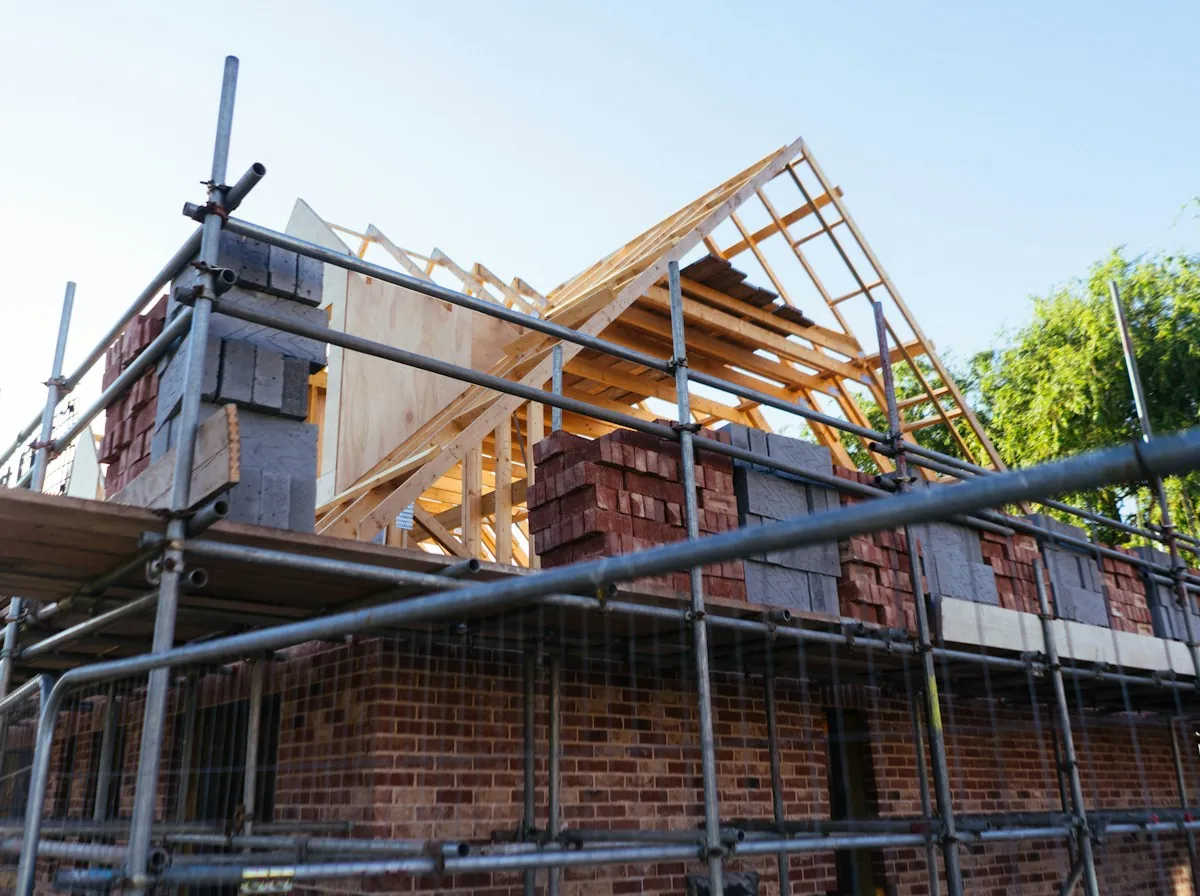
Metal over a multi-family building is usually specified for the low slope rather than the pitch, and for low slope that means a mechanically seamed panel, not a shingle-substitute profile. Gauge, panel and clip system belong in the written scope; without them 'metal roof' is not a specification.
Standing seam metal installs at $10 to $19 per square foot in New Jersey, which is roughly double architectural shingle. People ask whether that pays back, and the honest answer depends on how long you intend to own the house rather than on anything about the metal.


Standing seam metal installs at $10 to $19 per square foot in New Jersey, which is roughly double architectural shingle. Whether that pays back depends on how long you intend to own the house rather than on anything about the metal, and we would rather say so than sell the upgrade. Assume permitted work and price the logistics. Three- and four-family buildings are never exempt, tenants need notice, and the sequence that keeps every unit covered overnight is what the schedule is actually built around.
Every valley, dormer and penetration is a detail formed by hand, and the labor is most of the cost. A long simple run is where metal is worth buying; a cut-up city roof is where it is not.
Gauge, panel profile and clip system. Without those three, 'metal roof' is a word rather than a specification -- and if a complicated roof is quoted at close to shingle money, something has been left out.
Low-pitch sections, long unbroken runs, and snow shedding. It sheds where shingle holds, which is an advantage as long as somebody has thought about what it sheds onto.
Bayway is where the exemption most often does NOT apply. A three- or four-family building is outside ordinary maintenance regardless of what its roof needs, so a permit is part of the job from the start -- and with tenants in place, notice and sequencing matter as much as the roof does.
It comes up twice in what people search for here, and it is Florida's. What actually decides this in New Jersey is simpler.
Florida Building Code, Existing Building, section 706.1.1: not more than a quarter of a roof area repaired, replaced or recovered in twelve months unless the whole system is brought up to current code. It is quoted nationally because it sounds like a principle. It is not New Jersey law and nobody here has to comply with it.
Two coverings is the practical ceiling. A roof already at two is a tear-off whatever anybody quotes. It takes two minutes to check at the rake edge and it is the fastest way to tell whether the quotes in front of you are describing the same job.
On an attached house a repair can be ordinary maintenance while the replacement is permitted work -- so the smaller job is also the faster one. That is worth knowing on a marginal roof. It should not decide a clear one.
Assume a permit in Bayway and you will usually be right.
In Bayway an attached building is frequently also a three- or four-family one, which means the permit question is settled twice over and the real work is logistics.
Multi-family shingle work in Bayway usually means a larger roof with a flat section behind it, and the two need different products on the same building.
On a three- or four-family building the flat roof is the whole roof, and the arithmetic is straightforward: EPDM at $5 to $9 a square foot, TPO at $6 to $12, tear-off and insulation included.
This is the core of the work in Bayway.
Every dwelling type at once. The permit answer moves.
The most detached part of the city. Often no permit.
Two-family houses, sitting exactly on the line.
Close-set stock, and the rear extension question.
Waterfront wind. It finds the edge detail first.
Detached township, and a different construction office.
Wide plots, so the city's access costs disappear.
The questions that decide this job, answered up front.
That depends on how long you intend to own the house, not on anything about the metal. Standing seam is $10 to $19 per square foot against $5.50 to $8.00 for architectural shingle. Over thirty years the arithmetic favors metal; over seven it does not, and nobody should pretend otherwise.
Yes, and that is the question to settle before you buy it. Metal sheds where shingle holds, which is an advantage until it sheds onto a path, a porch, a car or a neighbor's garden. Snow guards exist and belong in the scope when the geometry calls for them.
Because most online figures are national and this is not a national market. New Jersey pricing is $9,500 to $26,000 for an architectural asphalt roof, and a large part of the difference is detailing a warm climate does not need: ice barrier at the eaves, drip edge, and the nailing to survive a February gust. A quote that matches a national average has usually left one of those out.
Shingle, clearly, and by roughly half. Architectural shingle installs at $5.50 to $8.00 per square foot in New Jersey against $10 to $19 for standing seam metal. Metal earns that premium on long simple runs, on low-pitch sections and where snow shedding matters. On a cut-up roof with dormers and valleys it mostly does not, because every detail is formed by hand.
No. The inspection is free, the written quote is free, and neither carries an obligation. The survey also answers the permit question in writing, which is worth having even if you decide to use somebody else. What we will not do is give you a number at the curb without going up.
Free inspection, and the permit question answered before any price. New Jersey figures, not a national calculator.