Metal Roof Replacement in Hillside from $10. Standing seam at $10 to $19 a square foot, and an honest answer about whether it is worth it here. Free inspection and a written quote.
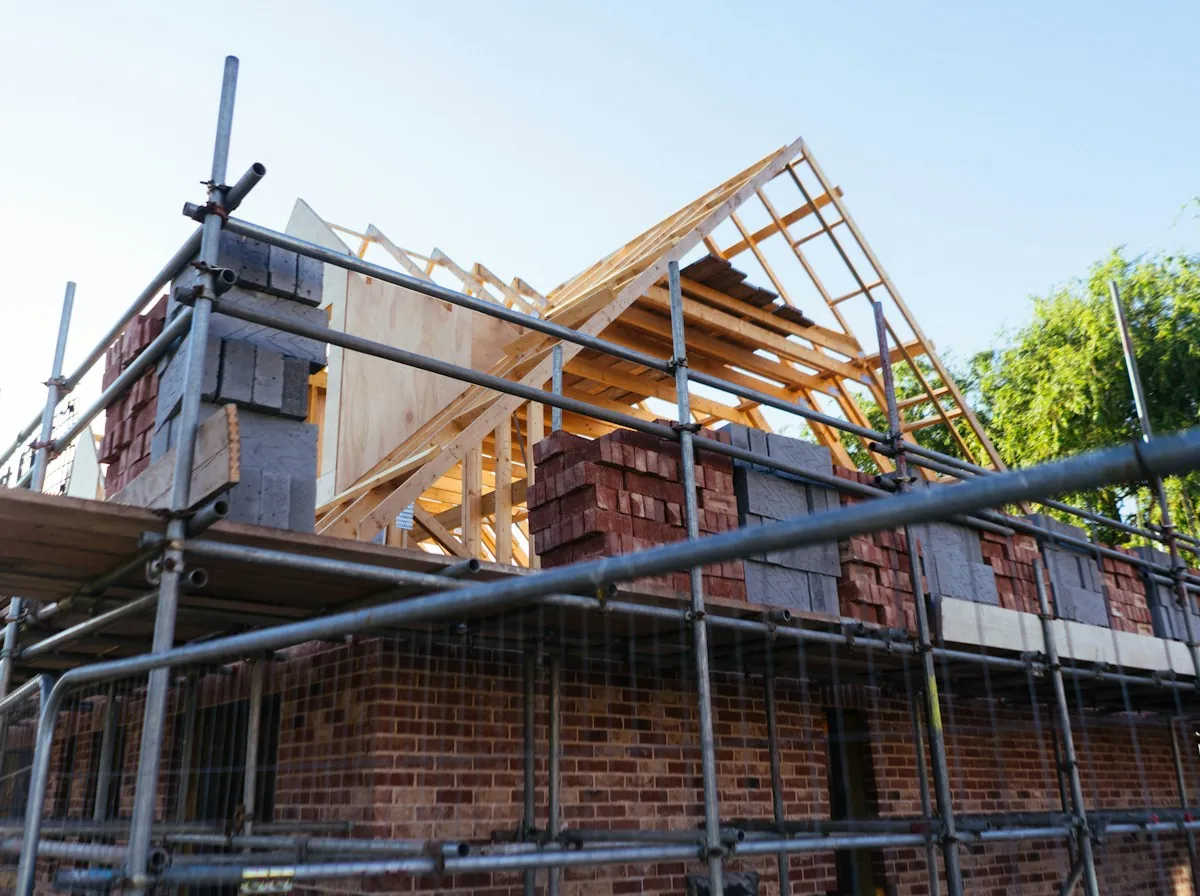
Straightforward detached roofs with room to handle long panels make Hillside a reasonable place for standing seam, and the permit question usually answers itself. What is worth asking is how the metal terminates where a twin meets its neighbor, if that applies.
Standing seam metal installs at $10 to $19 per square foot in New Jersey, which is roughly double architectural shingle. People ask whether that pays back, and the honest answer depends on how long you intend to own the house rather than on anything about the metal.


Standing seam metal installs at $10 to $19 per square foot in New Jersey, which is roughly double architectural shingle. Whether that pays back depends on how long you intend to own the house rather than on anything about the metal, and we would rather say so than sell the upgrade. Generally the cheaper half of this list. More detached stock means the exemption applies more often and no permit is waiting, and consistent housing means fewer surprises under the covering. Where a permit is needed it is the Hillside office, not Elizabeth's.
Every valley, dormer and penetration is a detail formed by hand, and the labor is most of the cost. A long simple run is where metal is worth buying; a cut-up city roof is where it is not.
Gauge, panel profile and clip system. Without those three, 'metal roof' is a word rather than a specification -- and if a complicated roof is quoted at close to shingle money, something has been left out.
Low-pitch sections, long unbroken runs, and snow shedding. It sheds where shingle holds, which is an advantage as long as somebody has thought about what it sheds onto.
More detached stock than Elizabeth means the ordinary-maintenance exemption applies more often, and a straightforward covering replacement here is frequently a no-permit job. Where a permit is needed it goes to the Hillside construction office, not Elizabeth's -- a different desk enforcing the same state code.
Worth knowing before you start calling round, and worth building into anything with a date attached to it.
Northern roofs do not fail gradually through a dry summer the way southern ones do. They fail at the edges in the freeze: water backs up under the courses at the eaves, freezes, lifts them, and the ceiling below stains during the first thaw. That means the calls arrive in a cluster, in the same two weeks, and the roof that could have been done comfortably in September becomes an emergency in February.
More detached stock than Elizabeth, so the ordinary-maintenance exemption applies more often and a straightforward replacement is frequently a no-permit job.
Semi-detached and twin housing is common in Hillside, and a twin is attached for the purposes of the exemption even though it looks like half a house.
Consistent early-twentieth-century stock means a neighbor's experience is a reasonable guide in Hillside, which is not true across most of Elizabeth.
Flat sections in Hillside are usually additions on otherwise pitched detached houses, which raises a useful question: a covering replacement on the flat part alone may be ordinary maintenance, while rebuilding its fall is structural and is not.
Multi-family is the minority in Hillside, so when it appears it is usually a two-family converted to three, and that conversion is what decides the permit.
Every dwelling type at once. The permit answer moves.
The most detached part of the city. Often no permit.
Two-family houses, sitting exactly on the line.
Close-set stock, and the rear extension question.
Two- to four-family. Assume a permit and be right.
Waterfront wind. It finds the edge detail first.
Wide plots, so the city's access costs disappear.
The questions that decide this job, answered up front.
That depends on how long you intend to own the house, not on anything about the metal. Standing seam is $10 to $19 per square foot against $5.50 to $8.00 for architectural shingle. Over thirty years the arithmetic favors metal; over seven it does not, and nobody should pretend otherwise.
Yes, and that is the question to settle before you buy it. Metal sheds where shingle holds, which is an advantage until it sheds onto a path, a porch, a car or a neighbor's garden. Snow guards exist and belong in the scope when the geometry calls for them.
Two to four days on site for a house once it starts: tear-off and dry-in on day one, covering after. A multi-family building is three to six. Weather moves it and we will not dry-in a roof we cannot finish. If the building needs a permit, the filing and inspection are days on top of that, which is why the permit question is settled first.
No. The inspection is free, the written quote is free, and neither carries an obligation. The survey also answers the permit question in writing, which is worth having even if you decide to use somebody else. What we will not do is give you a number at the curb without going up.
It is Florida Building Code, Existing Building, section 706.1.1: not more than 25 per cent of a roof area may be repaired, replaced or recovered in any twelve-month period unless the whole system is brought up to current code. It is quoted all over the country because it sounds universal. It is not New Jersey law, and in New Jersey the question that decides your job is whether your dwelling is detached.
Free inspection, and the permit question answered before any price. New Jersey figures, not a national calculator.